Monday, March 17, 2008

How do I gain weight?

Looking back through my old journals, I came across another crazy experiment that I once did.

Do you remember back in the early 2ooo's when 'bulking cycles' were all the rage? Bodybuilders would purposely put on weight in the hopes that while most of it was fat, a little bit might be muscle.

Well, I once took this to the extreme, trying to figure out how much weight I could put on in only 14 days.

I was on a normal 'bulking diet' consisting of roughly 5,000 calories. This consisted of breakfast, second breakfast, weight gain shake, lunch, pre-workout shake, post-workout shake, dinner, and bedtime weight gain shake.

However, this routine just wasn't cutting it, so I added one small extra touch.

Each morning I poured 2 cups of almonds and 1.5 cups of Ocean Spray craisins into a tupperware container and took it to work with me. My goal was to continue to eat my normal way, and to finish this container everyday before I left work.

Now, this may not sound like much, but 2 cups of almonds and 1.5 cups of crasins contains roughly 2,300 calories!

I didn't make it through the entire 14 day experiment (I ended on day 11, I just couldn't take it anymore). I had put on 12 pounds in 11 days! Four days after the experiment, after letting my GI and bowels settle down, I stepped on the scale to find I was till 9 pounds heavier.

Unfortunetley, according to my measurements, this was all fat (despite super heavy twice per day workouts).

Yet another experiment I did in the name of "getting big". If I could give one piece of advice to someone who is just starting to dive into the bodybuilding scene, I would tell them to never ever "bulk". To me, it is a waste of time, and some of the guys I used to train with never really recovered (some of them still joke about being on a a ten year bulking cycle!)

BP

PS - Believe it or not, only a couple months after this experiment, I repeated a slightly less harsh version that pushed my weight from 185 to 216 pounds in four months, only to have to go on a super strict 'cutting' diet to get right back down to...you guessed it...185 pounds...I wish I knew about Eat Stop Eat back then!


lose weight easily with intermittent fasting

Stumble Upon Toolbar

Sunday, March 16, 2008

How much glutamine do I have to take to gain weight?

A couple of week ago I told you about how my basement flooded due to a freak thaw we had in Ontario. Well, I'm still dealing with the repercussions of that little flood.

Mostly, it has forced me to clean out my basement (which is no small task). I'm almost done now, but on Friday I was still going through some of my old boxes.

After throwing out a couple kilograms of Leucine and BCAA's, and about 3 years worth of Muscle and Fitness Magazines, I stumbled across some of my old training journals.

Now, normally, reviewing my old workouts isn't something I would consider 'blog worthy', but these particular journals were from back when I was working in the supplement industry, and outlined some of the crazier experiments I have performed on myself over the years.

Of course, If I could send a message back in time and tell my 8 year younger self that I would be advocating flexible and brief periods of intermittent fasting for weight loss, I'd probably think future me was crazy...However now that I am looking at some of the things I did 'back in the day', all I can say is "wow".

For instance, have you ever taken glutamine? I have. But I didn't just "take" glutamine, I mega-dosed with it.

Back in 2003, when most people were dosing their creatine with upwards of 75 grams of sugar I was thinking about a different approach. At the time I was experimenting with a low carb, super high protein diet, so I really did not want to be taking an extra 150 grams of pure sugar if I could some how avoid it. Somehow, I cam up with the idea of:

'What if I dosed 10 grams of creatine twice a day, but instead of using a mega dose of dextrose, I took a mega dose of glutamine?'

A simple enough question, and an even simpler experiment to conduct (especially when you have an unlimited supply of glutamine).

For 14 days I took 10 grams of creatine with 80 grams of glutamine once in the morning, then again after my workout in the evening.

From my notes I can see that I didn't have any weird GI problems, or any other unwanted effects. However my weight only increased marginally (3 pounds) which was typically of a creatine load for me, so the experiment ended with the notes

"160 grams of glutamine per day not any better than 20 grams of creatine."

Keep in mind that this was an experiment that only had one subject (me) and was definitely not blinded, so really it is just a review of my own personal experiences, but fun nonetheless.

This was probably one of the tamer experiments I tried. I've also uncovered the notes for a couple of different over-feeding experiments, as well as some crazy fat burning experiments that I will share later in the week.

BP

PS- Sara over at the Sanaworld Blog wrote a very interesting review of Eat Stop Eat that touches on the psychological effects of fasting and some of her own experiences with fasting and obsessive compulsive eating. You can check out part 1 of Sara's post HERE.


No more counting calories to lose weight

Stumble Upon Toolbar

Thursday, March 13, 2008

Why am I so hungry?

If there's one thing I've noticed about Eat Stop Eat, it's how it makes me very aware of what does and doesn't make me hungry.

Oddly enough, when I'm fasting, I rarely get hungry, but when I'm eating and I miss a meal, I get hungry (and grumpy).

I've received a number of emails on the topic of intermittent fasting and hunger, and I think I've figured out my own personal theory on the connection.

In fact, I received an email this morning from my friend Justin Owings (www.justinowings.com) about his experiences with Eat Stop Eat, and I think between the two of us our experiences with fasting and hunger have been identical..

Brad,

I've been implementing about two fasts a week for around a month now and
have managed to lose about 10 pounds of weight and 2 - 3% body fat.

What I'm curious about is how fasting has seemed so easy for me. I don't
get heavy hunger pangs while fasting -- when I do notice my stomach, its
usually for a minute or two and then it completely goes away. Does this
mean that my body has adjusted? I originally just assumed that my body had
switched to fat burning for energy, and since there's still a solid amount
of fat energy to use up, it doesn't send me heavy "hunger" signals.

Just curious if you had any thoughts on this.

Justin

Hey Justin,

Great question and great timing, I was just discussing this exact same
phenomenon with some colleagues.

We believe that it's not as much your body that is adjusting to the fasts
as it is your mind.


For instance, on a non-fasting day, if I was planning to eat at noon, but
got caught in meetings until 2, I would feel like I was "starving". Yet on
fasting days, I absolutely do not notice that I have not eaten. Typically,
I don't get hungry at all, except for a few hungry pangs that may last for
a minute tops.

I've come to the conclusions that this has a lot to do with expectation of
eating, and the
biochemical reactions that this expectation causes.

So I think what you are experiencing is a better control over your minds
influence on your body. I think that because fasting allows you to take
breaks from constantly eating, it teaches you better control over the
perceptions of being "hungry".

In the end, even hunger may be a case of "mind over matter".

Brad


lose weight easily with intermittent fasting

Stumble Upon Toolbar

Monday, March 10, 2008

Intermitent Fasting - Simple Reasons to Give it a Try...

I stumbled across a really good post about some of the more "Life Friendly" benefits of following a intermittent fasting lifestyle such as Eat Stop Eat....

You can check it out here ==> Simple Benefits of Fasting

You can learn more about the benefits of following a flexible form of Intermittent Fasting by Clicking here ==> Flexible Intermittent Fasting

BP


No more counting calories to lose weight

Stumble Upon Toolbar

Sunday, March 09, 2008

How Much Does Weight Loss Cost?

I took some time today to start getting caught up on work. After answering a bunch of emails, I start searching the 'net for fat burners.

Yep, I was looking at weight loss supplements.

One of the things I like to do is to make sure I keep up on the weight loss supplement industry.

I don't work in the weight loss supplement industry any more, but I find that it is beneficial for me to keep up to date on the latest products and their advertising.

From my experience, the supplement industry is always on the cutting edge for what is new and "in". If certain catch phrases are in a supplement ad, then you can bet they will be mainstream in another couple months. In fact, I think some of these companies are innovative enough that their marketing can actually create media trends.

As I was going through the ads and the products out there I realized two things - There isn't much new going on in the supplement industry, and the supplement industry has actually managed to put a price on weight loss.

That's right. With a quick little experiment we can actually figure out how much the supplement industry is charging you per pound of weight lost.

Assuming their weight loss claims are correct, and that if (and this is a big if) you were to take their products you would actually lose the amount of weight they say you will, then you can actually put a price on weight loss.

For instance, the very best claim that I have seen on a supplement is that you will lose about 15 pounds in 8 weeks. So, hypothetically if you took this product (we'll call it product X) for 8 weeks you would lose 15 pounds.

Now, with product X you had to take 4 pills per day and the bottle contained 80 pills.

Therefore, to take the product for the full 8 weeks you would need to buy 2.8 bottles, and since you can't buy .8 of a bottle, you'd have to buy 3 bottles.

You can buy fat burning supplements for a wide range of prices, but the average is around 29.99. However sometimes you can find the 29.99 ones on sale for as low as 25.99, so lets just say product X costs 25 dollars per bottle.

What do we get from all this math? Simple, according to the supplement industry losing 15 pounds should costs you 75 dollars (3 bottles in 8 weeks, at 25 dollars per bottle).

Or about 5 dollars per pound (And remember, this is assuming their products actually work!).

No wonder they are a multi billion dollar industry!!

Truthfully, weight loss shouldn't cost you this much. In my opinion there are only three things you need to lose weight, and once you have them, you can lose weight and maintain that weight loss for as long as you want without ever having to pay any more money.

Those three keys?

A proper diet that you can stick to long term, an exercise program that you find challenging, and supportive friends and family is all you need to lose weight.

BP

PS- speaking of exercises, here are two cool videos from Craig Ballantyne of turbulencetraining.com

Bodyweight workout
Fat Burning Workout


lose weight easily with intermittent fasting

Stumble Upon Toolbar

Saturday, March 08, 2008

How to Prevent Vacation Weight Gain

I'm back, and it's snowing. Again. This winter has definitely made me start to think about relocating to somewhere warm, at least during the winter months.

(Are you kidding me!? I've got to shovel THAT just to get to the gym?)


The good news is I had a great vacation, and was able to spend a ton of time with the family. The other good news is that neither my wife nor I gained any weight, despite eating "vacation style" for 7 days.

We made a point of practicing the rare art of "fasting to avoid spending tons of cash at the airport" and made sure our fasts occurred during our flight to Florida, and during our flight home.

Worked like a charm.

So here's my tip...If you are planning on going on vacation, keep up your Eat Stop Eat regimen, but make sure to spend the 'travel days' fasting, it will cut down on costs, and lots of calories that you don't really need (I doubt any of us burn a lot of calories sitting on a plane).

Not only was it a great vacation, but last week was also full of some great reviews for Eat Stop Eat.

First, Craig Ballantyne shared some very positive reviews of Eat Stop Eat from his TTmembers site (you can read them here ==> Eat Stop Eat Feedback)

Then Eat Stop Eat was reviewed at Your New Body - You can read this review here ==> Eat Stop Eat Review

Finally, I read a great post at the Skwigg blog, where Skwigg stated that Eat Stop Eat has helped her become a "Happy Eater". (You can read Skwigg's post here ==> Happy Eater)

In an industry full of obsessive compulsive eating, nutritional scaremongering, and food confusion, nothing could make me happier than hearing someone describe themselves as a happy eater.

Really, this should be everyones goal.

BP


No more counting calories to lose weight

Stumble Upon Toolbar

Tuesday, March 04, 2008

Did you read that blog post on intermitent fasting?

Greetings from Orlando, Florida!

After having enough of shoveling snow, horrible winter driving, and being cold all the time, I've taken a week off to visit West Gate Vacation Villas in Orlando Florida.

Brier traveled awesome in the plane, and has been a little gem for the whole vacation (she's saving up the drama for when she becomes a teenager!).

My wife and I both fasted on the days we flew. We figured this saved us a combined 20-30 dollars worth of food we definitely did not need to eat.

It's been a great week so far, and I've committed to doing as little work as possible.

(Hard at work doing the best kind of work possible!)

Yesterday I decided to check my email. Imagine my surprise when I found over a half dozen emails all on the same topic...

"Brad, did you see the post by Dr. Eades on the four day work week blog?"

Well, my curiosity was peaked and I took the time to read the posts. And honestly, I disagree with a lot of what was said. I even went so far as to post a comment (which I rarely do).

(I should point out that Eat Stop Eat is not just intermittent fasting. Its the combination of a flexible form of intermittent fasting combined with resistance training...and the resistance training part is very, very important.)

After posting, I stopped to think about the phenomena of the blogosphere and the internet. After some serious thought I have decided that I am no longer going to spend time defending Eat Stop Eat. It's a lesson in futility. Their will always be nay sayers, the concept of starvation mode will never go away, and some people will never be satisfied with the simplicity behind the concept of weight loss being as easy as finding a way that allows you to eat less with the least amount of hassle.

It is also very hard for me to argue because I will always have a vested monetary interest in Eat Stop Eat, so I can never be completely unbiased (although I always disclose this, even in lectures and seminars).

For these reasons I will spend my time promoting Eat Stop Eat, but not defending it. Promoting it allows me to reach people who are honestly looking for help, and who are looking for an easy and effective way to lose weight.

Defending Eat Stop Eat typically involves arguing the semantics of research, a practice that can be best described as focusing on the trees instead of the forest...or in this case its more like aruguing about the stroma in the leaves.

I will leave the debating up to capable people like Chris Highcock, Adam Steer, Martin Berkhan, and Matt Metzgar, all of whom I beleive to be very bright, well spoken and well educated in the area of intermittent fasting, but than can also be viewed as much more unbiased on the topic than I can.

Brad

PS- I've handed off my black berry for the rest of the trip...

(Busy screening Daddy's emails until we leave Florida)

Stumble Upon Toolbar

Tuesday, February 26, 2008

Losing weight with Intermittent Fasting

For a great success story that has a cameo appearance by non-other than Eat Stop Eat, check out Richard Nikoley's latest blog post here:

Success with Intermittent Fasting

I think Richard's story fits perfectly with the Eat Stop Eat phiolosophy of flexible periods of intermittent fasting combined with a time-efficient weight training program.

BP

PS - Here's some great feedback I received over Email from Sue Grady
in Pennsylvania

"I love your book, EAT STOP EAT. great information, thank you for finally telling the truth! I just finished my first fast, and you are right. i actually felt *fantastic* without food in my system."

Stumble Upon Toolbar

Friday, February 22, 2008

Why am I so Tired?

Yesterday was a daddy / daughter day.

I took Brier to a breakfast place we have around southern Ontario called Cora's (www.chezcora.com).

After eating a rather massive breakfast for lunch consisting of french toast, crepes and fresh fruit, I headed back to the office, and battled to stay awake for the rest of the day.

I know I may come across as a "pro-carbs" kinda guy, but in reality, I mean it when I say "we could all benefit from eating a little less carbs." The difference is, I don't think you need to cut carbs for weight loss, but I do think their are health benefits to eating less carbohydrates and especially sugar.

And, their may be productivity benefits too. I can't recall the last time bacon and eggs made me sleepy. But I know that anytime I have a big "sugar bomb" type of meal, I'm out like a light about 30 minutes after I'm done eating.

At thanksgiving, its not the turkey that gets me, its the stuffing.

Now that I think about it, I'm rarely "nappy" during my fasting days (and I love my naps).

Makes you wonder about the miracle meal that breakfast is made out to be. There seems to be some missing logic here.

Wake up, then try your best to put yourself right back into a deep sleep by eating pancakes, oatmeal, toast and maybe some OJ.

Bottom line - If you are constantly asking yourself "Why am I so tired all the time?", maybe it's what you are eating (as opposed to the far too common answer of "you must be hungry, eat something").

BP

PS - Here is some great Eat Stop Eat feedback from the ttmembers forums (www.ttmembers.com)...

"I have been on the Eat Stop Eat program now for 6 weeks. A solid 12lb wt
loss! So far for me its the easist diet I have tried. Activity level is
turbulance wts 2 x per week. Recumbent bike interval 2x per week. Brazilian
jiu-jitsu 2 x per week. I am 53. Male. Starting wt 251 present wt 239."

Stumble Upon Toolbar

Thursday, February 21, 2008

Eat Stop Eat - Europe's Best Kept Secret?

Back when I first started writing Eat Stop Eat, I was very careful not to mistakenly put any exaggerations into my writing. Exaggerating is a simple mistake to make, especially when you are very passionate about what you are writing.

The one I was very careful to avoid was the "Fasting is so effective that it is used by millions of people in Europe", or "Fasting is so effective it is used with great success in European medical practice". Truthfully, I've read things like this on the internet, but was never able to find any true substantiation.

For those of you who remember what the bodybuilding industry was like back in the late 90's you will know exactly where I am coming from.

In the late 90's every single "new" supplement was "Europe's best kept secret", and was "So effective it is being used with great success by European Doctors".

The funny thing is, I have just learned that with fasting, this might actually be true. I received a very interesting email from a friend who lives in France who has also authored a book on the topic of fasting.

I have always been very curious as to how Europe views the concept of fasting for weight loss. In our conversation I learned that fasting is actually quite popular in many European countries.

In the email he stated that "In Germany, two million people do a week of fasting every year". He also shared that "In Russia, fasting is a recognized medical treatment, and the most popular Russian book on fasting sold 30 million copies in ten years (Goldanie by Malachov)."

I'm not sure if this is a practice of prolonged fasting, or if it is more of an Eat Stop Eat style of intermittent fasting. (I am going to try to get my hands on a translated copy of these books to learn more). Whatever the case may be, I found all of this information very interesting.

There is even a French Federation of Fasting and Walking, which I am eager to learn more about. I really like the simplicity of this concept...I can just imagine the slogan "Have you put on some weight lately? Well stop eating so much and go for a walk!"

Add in a weight training session or two and you've got my endorsement!

BP

Stumble Upon Toolbar

Wednesday, February 20, 2008

How to keep arm size while dieting

I received a great question over the weekend about dieting and losing muscle.

To paraphrase the question, it was quite simply, "If I am not losing muscle mass while I am dieting, then how come my upper arm has lost a quarter inch in girth?"

Well, to get to the bottom of this problem we need to look at some very basic math.

Lets take a 16 inch arm as an example...

( I apologize for the bashed up knuckles and hairy armpits)

If you took my arm and cut it in half right through the middle of the biceps, this is what it would look like...

(A hypothetical cross-section of my arm, labels included)

You will notice that my arm circumference can be described as circular. If we remember all the way back to grade 11 math class, we might remember that we can calculate the circumference of a circle from its radius and vice versa (I say 'might', because I had to look it up on google)...

(The radius is the distance from the center of your arm all the way to the skin on the outside)

Since we know that the circumference of a circle can be calculated by the equation Circumference = 2(pi)radius, we can determine how much (or little) of a change is needed to the radius of the arm to create a quarter inch loss in girth...

So for a 16 inch arm like the one in the picture above, the radius would be 2.546 inches. For that same arm to lose 1/4 of an inch in its circumference, the radius would have to be reduced to 2.507 inches, a loss of a little less than 1 mm.

So if I lost a little less than 1 mm of subcutaneous fat from my arm (which is more than possible, and barely detectable with most skin fold calipers) I could lose a whole 1/4 inch of my arm measurement without actually losing any muscle mass.

Fat loss happens everywhere,

BP

PS- If you are interested in an easy way to lose fat without losing any muscle, check out EAT STOP EAT here and learn more about flexible fasting for weight loss.

Stumble Upon Toolbar

Friday, February 15, 2008

Fasting AND Mental Clarity

As an early Valentines day present I bought my wife the new Mac Book Air. A fantastic machine that has made both our lives a lot easier (For those of you thinking "who gives people electronics for Valentines, don't worry, I also bought her roses!).


Now, no matter where we are in the house or in our travels with lil' Brier, we can have access to the net. Add in the fact that her new mac book is thinner than my Black Berry, and only weighs 3 pounds, and you have the perfect computer for a new Mom on the go (Brier has a busier social schedule than any other 8 month old I know!).

Thanks to the MacBook Air, I was able to spend some time this morning reviewing The Conditioning Research Blog. A great blog that covers a lot of relevant information on fasting.

I noticed Chris ( the blog's author) makes some comments about fasting and increased mental alertness and mental clarity.

I found this interesting because I have had a surprising number of people email me to tell me that they feel a heightened sense of energy and concentration while they are fasting.

It's true. Many people following Eat Stop Eat have told me that they are their most productive when they are fasting.

Perhaps this is because they aren’t spending any time worrying about what and where they are going to eat next, or perhaps it’s because fasting increases circulating levels of the adrenal hormones. Either way, it seems that brief periods of fasting can be useful as a method of increasing both your energy and ability to concentrate.

Eat Stop Eat - An effective way to lose weight that is much easier than you might think, and that just might help you finish that major presentation in time!


BP


No more counting calories to lose weight

Stumble Upon Toolbar

Thursday, February 14, 2008

The lighter side of Food

It's been pretty serious around the Nutrition Help Blog these last couple days. Luckily, Adam Campbell gave me a great idea....a little Jim Gaffigan to lighten the food.

Why Jim? About a minute in, it's all about food.


I could only imagine what Jim would Say about Eat Stop Eat..."I just ready a book about some guy who wants me to stop eating for 24 hours....is that even legal?"

BP

Stumble Upon Toolbar

Does capsaicin burn fat?

I can remember back to my supplement industry days when capsaicin was a big deal. It had a couple studies showing it increased fat burning and more importantly customers would actually 'feel' their fat burner working when it had capsaicin in it.

Unfortunately, this 'feel' was mostly increased gustatory sweating (not your metabolism revving up 2017% higher than normal), and in my personal opinion all the capsaicin in the world isn't going to make you lose weight.

However, capsaicin isn't completely worthless. After all, it's the chemical in chili peppers that makes them "hot". And, from my experience most pungent components of foods such as capsaicin tend to have health benefits.

Lucky for us a company has finally found a great way to use capsaicin in one of their products.


(Lindt Excellence Dark Chocolate with Chili - Pure Awesomeness)

Rich dark chocolate and chili pepper extract. Trust me, it tastes way better then it sounds.


BP


PS- Happy Valentine's Day!

Stumble Upon Toolbar

Tuesday, February 12, 2008

Does Cutting Calories Work?

I am beginning to hate shoveling. We are preparing for another 10-12 inches of snow tonight, and I still haven't completely shoveled the last big dump of snow that hit us on Friday. I think it's time to move somewhere warm. I'm thinking Gainesville!

I've been trying to answer all the comments that have appeared on my last post, and I've noticed a number of them are referring back to Gary Taubes. Many people have mistakenly taken the main point of his book "Good Calories, Bad Calories" to be that cutting calories wont help you lose weight.

Instead of getting involved in a big scientific debate over this, I'm going to use the scientific method with this one.

I'm a giant fan of Karl Popper, in my opinion he is one the greatest contributors to the scientific method. It was Popper who suggested that nothing in science could be proven correct, it could only be proven incorrect. And that these constant attempts at proving theories incorrect is what moves our knowledge forward.

So, for the theory that caloric restriction does not work for weight loss, and that the only way to reduce weight is by decreasing the intake of carbohydrates, regardless of calories, I would suggest that extreme results that occur with both laparoscopic band surgery and gastric bypass surgery are evidence that reducing the amount of calories the body can absorb results in substantial, measurable weight loss. These finding are repeatable and reproducible.

(An extreme example, but it does prove a point)


Because of the strength of these finding we can say that with surgical interventions that result in the bodies inability to absorb calories from food their is a rapid reduction in total body weight.

Because of this, we can say that the statement that reducing calories does not cause weight loss is invalid. Irrespective of the percentage of carbohydrate intake, the simple act of reducing calories will reduce bodyweight.

BP

Stumble Upon Toolbar

Wednesday, February 06, 2008

Calories, Weight Loss & Weight Gain

Remember how I told you I was snowed in on Friday? Well it’s been exceptionally warm today, so as a result I’m at home dealing with a flooded basement. Awesome.

Somewhere in-between ripping up carpet and tearing down drywall I managed to check my email this morning and received a very interesting question:

“Have you ever met someone who was eating too few calories for weight loss and then when they ate more, they lost weight?”

In my opinion fitness experts are making a huge mistake telling people that you can actually eat so little that you stop-losing weight.

Only in the diet industry could people get away with making a statement like this that lacks so much common sense.

I think this misconception is caused by the articles you read in bodybuilding and fitness magazines and is a prime example of obsessive compulsive eating (OCE).

If you dig down into the history of this theory you will find that it comes from the idea that all we have to do is slightly cut our calories to lose weight at a super accelerated rate.

Let’s analyze the classic example of a man attempting to get shredded by reducing is calorie intake from 2400 down to 2200.

Firstly, it’s important to realize that none of us really know exactly how much we eat.

Sure, we can get a rough idea by using tools like fitday.com, and we might be able to say we eat around 2400 every day, but we could be off by a hundred or so calories in either direction simply as the result of some bad rounding and incorrect estimating.

For instance, a food that is 100 Calories per serving could actually be 104, and the 2 servings you ate could actually have been closer to 2.5. These small little underestimations can all ad up pretty quickly.

Secondly, and here’s the kicker, we really have NO IDEA if 2400 was the right “maintenance” number to begin with!

Perhaps for the person in the example a true maintenance intake is actually 2332 Calories and the 2400 that he has been eating represents a very slow almost undetectable steady weight gain.

Now a reduction down to 2200 calories is barely a 4% reduction in calories. And, I guarantee that in this situation on any given day, 2200 could easily become 2300 and thus cause no weight change at all.

Hopefully by now you are seeing why over-analyzing your nutrition and focusing too much on numbers can cause “Paralysis by Analysis”. Things that should work on paper may not work in real life.

It may be true that over the long run even small changes like this can create big results, but it takes some serious amount of appraisal and adaptation to make weight loss happen at more drastic speeds.

So forget all of the numbers and equations and stick with what we know for sure-
If a certain amount of calories does not make you lose weight, then that amount of calories is the amount it takes to maintain your current weight at your current activity level.

To lose more weight you can either decrease the calories you eat, or increase the calories you burn. It does not matter who you are or what you do; this is the easiest most logical approach.
It also does NOT matter what person X eats or how much person Y exercises, it only matters how much YOU currently eat and if YOU are currently losing weight.

If you aren’t losing weight and you want to, then you must adjust your calorie deficit.
The idea that there is a dieting threshold and that dieting too much will actually stop weight loss is silly.

I think it is important to for us to look outside of health and fitness occasionally. A very harsh example of the effects of extreme caloric deprivation is people who suffer from anorexia.
These poor people reduce their calories to ridiculously low levels to the point where they waste away until they die.

They never hit a magic number where they stop losing weight. AND they see massive losses of muscle mass, so by the classic definition they would have 'slower' metabolisms, yet they still lose weight until they are a walking skeleton, and then unfortunately for many of them, until they are deceased.

I know this is a very harsh example, but it puts things into perspective, and corrects our myopic “health and fitness” view of how the body works.

People who advocate the idea of “eating so little that you stop losing weight” should Google image search anorexia just to remind themselves how ridiculous they sound. And, imagine how they must make families who have lost loved ones to anorexia feel when they say; “if you eat too little you won’t lose weight”.

Another, less tragic example are long distance runners.

These people eat a lot. And they eat a lot of Carbohydrates. But because of their training they still spend large periods of time in a caloric deficit.

This combination of intense exercise and not being able to make up for this level of training with the amount of foods they eat keeps their bodyweight and body fat at extremely low levels. It does not make sense that eating even less would slow their weight loss.

"Amy, you're looking a little thin, better start eating less so you don't lose any more weight"


Lastly the idea that eating more will actually cause you to lose weight, is just typical of the OCE confusion that they use to fill the fitness magazines and that over the years has managed to dig its claws into the dieting paradigm.

If a long distance runner started to eat more food, they would start losing more weight? Similarly, would an anorexic lose more weight by eating more? I don’t think so.

Now I’m not condoning extremely harsh low calorie diets (I think a 10-20% reduction from a true maintenance is ideal).

What I am advocating is careful appraisal of the progression of a diet, and logical problem analysis for logical solutions. Follow this paradigm and nothing about weight loss ever has to be drastic.

If you lower your calories you will lose weight. If you continue to lose weight you will eventually hit a new weight that your lower calorie intake can maintain. This means you will stop losing weight.

If you lower your calories slightly again you will start losing weight again until your body reaches the weight that your new lower calorie intake can support. These changes may be very minor, but they still need to be made.

I will admit that drug use may skew everything I just said, as would people who are attempting to get to super freaky levels of near death body fat for a real bodybuilding show.

I’ve spoken with many trainers who have very unique stories about top level athletes who are getting down to incredibly low levels of body fat and who have stalled in their fat loss. If you are trying to go from 4.5% body fat down to 4% you are way outside of normal human physiology and I admit I’m not an expert in this area.

In this unique situation things like “refeeding” days may actually be warranted. Again, preparing people to be on a stage, near death, flexing for an audience is not my area of expertise.

For normal people trying to lose weight, maybe even get lean enough to have a visible "6-pack" of abs, everything I just said is my educated opinion of the way things work.

There is a lot of confusion out there, but none of it is really logical.

This is why I hate Obsessive Compulsive Eating. It just doesn’t make any logical sense.

Its time we started thinking like children again. If you asked a classroom full of 8 year olds what happens if they eat too much they’d all yell out “we’d get fat”. Ask them what happens when they eat to little, they yell, “we’d get skinny”.

This is why I follow the Eat Stop Eat program. I simply don't beleive that equations, calculations and estimations are effective tools for weight loss. I like finding an amount of food that I can eat and maintain my current weight, then reducing the amount I eat so I lose weight. I just makes the most sense to me.

BP

Stumble Upon Toolbar

Friday, February 01, 2008

The Origins of Obsessive Compusive Eating

I'm snowed in today (gotta love Canadian winters).

In all honesty this couldn't have come at a better time. I have a major speaking engagement tomorrow I have to prepare for, and I have a number of emails I need to get written.

Naturally, since I have a crazy amount of work to do, I started the day off with the perfect procrastination tool - I decided to clean out my in-box.

This quickly became an eye opening expose into the origins of our Obsessive Compulsive Eating craze.

Ever wonder why so many people are so confused about what is good for them and what is bad for them? Well I think I may have found part of the answer. Take a look at the following e-mail subject lines I found in my In-box about caffeine, coffee and tea:

'Coffee linked to lower ovarian cancer risk', 'Caffeine linked to risk of miscarriage', 'Black tea shows blood sugar benefits', 'Caffeine linked to higher blood glucose levels'.

Or, how about Carbs:

'The carb rotation diet', 'eat all the carbs you want', 'carbs kill', 'whole grains may reduce pancreatic cancer risk', 'Good and bad carb definitions misleading says review', 'Carbs linked to obesity', 'Eat all the carbs you want and still lose weight'.

and sugar:

'High Fructose drinks no different to sucrose, milk for satiety', 'mechanism proposed for fructose syrup-obesity link', 'Soft drinks not responsible for obesity – study', 'Fructose linked to fatty artery deposits, study says', 'Study finds no link between sugar drinks and kiddie obesity', 'Should you really avoid fruit juice?'

And these were all just from January!

By constantly reporting on small little snip-its of research, writers can definitely create great headlines, but they do it at the risk of confusing their readers.

In academics, you constantly have to make sure you are aware of the total body of research. Which is just a fancy way of saying you need to know all the research on a certain topic, and how all this research fits together, before you should comment on that issue.

I feel comfortable talking to you about fasting, because I have spent years studying it. However, if I started reporting on one single paper that I read on Cardiovascular disease, then I would be doing you a major disservice as I do not know the total body of research on that topic.

It is this quick "snip-it" approach to reporting on nutrition and health that I think plays a role in people's obsessive compulsive eating. We only hear little tiny pieces of the story and very rarely do we hear about the nutrition "big picture".

Always remember when you read anything about nutrition that you must consider how this one little article fits into the total big picture.

BP

Stumble Upon Toolbar

Wednesday, January 30, 2008

Obsessive Compulsive Eating vs. Eating Responsibly

Obsessive Compulsive Eating vs. Eating Responsibly

It probably comes as no surprise that I don't get along to well with many other health and nutrition experts.

For the most part, I blame a lot of them for today's rampant outbreak of obsessive compulsive eating (OCE).

In my opinion people are worrying way too much about how to eat, when to eat, what to eat and why they should eat.

Eating is supposed to be healthy. And, it is supposed to be just as psychologically healthy as it is physically healthy.

Getting super stressed over the fact that you want to eat 9 times today, cycling your carbohydrates, making sure to only eat fat with your protein, to make sure there's no carrots in you salad, and that your post workout shake contained exactly 45.445476% protein makes no sense to me at all. I'd go so far as to say that the psychological damage that extreme OCE can do to you mentally far out weighs the damage an extra diner roll with supper can do to you physically.

While many health and nutrition professionals like to complicate matters as much as possible, every once in a while I get an email that makes a lot of sense, because its simple, logical and effective.

The most recent one came from Craig Ballantyne.

One of the most common questions I get regarding Eat Stop Eat is people asking how to eat during the days they aren't fasting. My answer is always to try and eat responsibly. If you want a good definition of what 'eating responsibly' should look like, see Craig's 5 steps in his email below.

Even step 5, (which may sound a little OCE) is definitely not an example of OCE. Sure, if you think of it like a bodybuilder freezing 49 individually weighed meals in his freezer then its probably OCE. But, if you think about someone who shops for their family, this is a very important piece of the healthy eating puzzle.

Simply put, if you run out of healthy foods on Thursday, and you have a family to feed, Thursday night will quickly become 'pizza night'. Have this happen 5 or 6 weeks in a row, and you are looking at recipe of an entire family overeating and putting on the pounds. Being prepared is different than being obsessed.

Here's a copy of Craig's e-mail in case you missed it...


I truly believe that nutrition is the biggest, by far, component of a good fat loss program.


There's a saying in the fitness industry, "you can't out-train a bad diet", and that hold's true almost 100% of the time (and especially as you get older).


Fortunately, I also believe that good nutrition for fat loss is very simple. And here are my 5 steps to building a fast fat burning diet.


1) Find out how much you are eating now. Use fitday.com.


2) If you are not losing weight, eat less.


3) Eat fruits, vegetables, nuts, and good protein sources. Don't eat junk from a bag or a box.


4) Give yourself one treat meal per week to look forward to - not a treat day, just a treat meal.


5) Plan ahead. Prepare your meals (spend 1-2 hours on the weekend getting your meals and meal plan ready for the week). Identify
obstacles and come up with solutions to avoid them.


That is it.


Very simple. Most people do pretty well on 1-3 and even 5, but mess up on number 4. I often hear how well someone did all day long, but then while making dinner they snack on upwards of 500 calories of their kid's treats, or other processed carbohydrates they have lying around the house.


The little things can add up to big time problems. So take a good long look at everything you eat.


And all of this can be avoided if you follow rule #5.


Combine my five simple nutrition rules with three short workouts per week of resistance training and interval training, and you have a very manageable fat loss plan that can fit any busy lifestyle.


Get started with the fast Turbulence Training fat burning workouts:
==> http://www.turbulencetraining.com


There are NO negative calorie foods,


Craig Ballantyne, CSCS, MS
Author, Turbulence Training


Couldn't have said it better myself,

BP

Stumble Upon Toolbar

Sunday, January 27, 2008

The Cost of a Weeks Worth Of Food...

Here's an interesting exert from an email I received yesterday (I think it may have originally been an article in Time Magazine). Not only is the amount of money each family spends on food very interesting so is the make up of their diets, and the number of people they are feeding....


Germany: The Melander family of Bargteheide
Food expenditure for one week: 375.39 Euros or $500.07


United States: The Revis family of North Carolina (Sure hope most American
families eat more fresh fruits and vegetables and less junk food than this family.)
Food expenditure for one week $341.98


�
Italy: The Manzo family of Sicily
Food expenditure for one week: 214.36 Euros or $260.11


Mexico: The Casales family of Cuernavaca

Food expenditure for one week: 1,862.78 Mexican Pesos or $189.09


Poland: The Sobczynscy family of Konstancin-Jeziorna

Food expenditure for one week: 582.48 Zlotys or $151.27


Egypt: The Ahmed family of Cairo
Food expenditure for one week: 387.85 Egyptian Pounds or $68.53


Ecuador: The Ayme family of Tingo
Food expenditure for one week: $31.55


Bhutan: The Namgay family of Shingkhey Village
Food expenditure for one week: 224.93 ngultrum or $5.03


Chad: The Aboubakar family of Breidjing Camp
Food expenditure for one week: 685 CFA Francs or $1.23

Stumble Upon Toolbar

For Any Candadian Parents...

For any Canadian parents who have young children, the following press release was sent to me this morning....

Four varieties of My Organic Baby cereal recalled, possibly rancid


OTTAWA - The Canadian Food Inspection Agency and a Vaughan, Ont.,-based company are warning the public not to consume four types of My Organic Baby cereal for infants, saying the product may be rancid.

My Organic Baby has issued a voluntary recall for 227 gram boxes of Barley, Brown Rice, Oatmeal and Multigrain cereal - all with 'Best By' dates of April 2008 and June 2008.
The affected product has been distributed nationally in Canada.

There has been one reported reaction associated with consumption of the cereal.
Consumers are warned that if the cereal has an unusual odour, or smells 'off' it should not be consumed. If an infant has been fed any of the products, parents are advised to monitor for possible symptoms of illness, and discontinue use.

Consumption of rancid food can cause nausea, vomiting and diarrhea.

http://canadianpress.google.com/article/ALeqM5g3ll5AxA00EaNhwFxkhByWdAoGYw

Stumble Upon Toolbar

Wednesday, January 23, 2008

How Working-out and Fasting Effects Your Blood Sugar

Here is another great post about fasting, workouts and your blood sugar.


BP

PS- Please remember, all of these experiments and recommendations are for healthy individuals, if you are diabetic your physiology is different.

PPS- I'm toying with the idea of making Eat Stop Eat Advanced into a DVD as opposed to making it a really big book. Let me know which you would like better...

Stumble Upon Toolbar

Friday, January 18, 2008

More info on Working out while Fasting

John Barban did a similar experiment to mine, measuring his blood sugar while completing a workout.


You can read about his finding by visiting here==> 


BP


You can learn more about the combined effects of exercise and fasting for weight loss by visiting www.eatstopeat.com

Stumble Upon Toolbar

Thursday, January 17, 2008

Fasting and Exercise

I've had a number of people ask me about the effects that fasting and exercise have on blood sugar.


In clinical research there generally isn't a concern that exercising while fasting will cause an ill effects to a persons blood sugar. The body is remarkably good at regulating blood sugar levels, even in the face of intense exercise.


In fact, most of the research on weight training and protein synthesis is conducted on people who have been fasted for anywhere between 12 and 16 hours. And, we know that there are professional athletes who play full NFL games in the fasted state.


However, as I have stated before, there is a difference between research and the real world. Most importantly, in research the people who participate as the subjects are always screened to make sure they are healthy, and that they do not have any underlying medical conditions that may effect the results of the study.


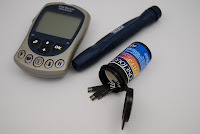
So, I figured this would be another great time to experiment on myself, using my dreaded glucometer.


After I was fasted for 22 hours, went to my Krav Maga class and took part in an hour of practicing leg kicks, body kicks and kicking and striking combinations. It was a hard class and I definitely sacrificed the health of my shins in the name of research!


Here are the results.


I started the class with a blood sugar of 4.7 mmol/L, pretty typical for me during fasting.


After an intense 15 minute warm-up of sprints, sprawls and various body weight exercises I retested by blood sugar and had a reading of 3.9 mmol/L (This is the lower end of normal, however I felt fine).


After the warm up we went right into shins kicks and defences with lots of moving around and striking, I was definitely sweating, and working hard, I took a quick break and tested my blood sugar which was at 5.6 mmol/L (This score is about the same as I would see after a meal)


We followed up with more pad work, throwing in some body kicks and more combinations and making sure our footwork was good, right at the end of the class I measured my blood sugar again and it was at 5.3 mmol/L (looks like I'm already returning to normal)


15 minutes after class my blood sugar was back down to 4.2 mmol/L. thirty minutes later it was 4.7 mmol/L and then right before my fast ended at 2 pm my blood sugar was 4.4 mmol/L. (Right back to where I should be. Time to eat.)


Just another example of the bodies ability to regulate blood sugar, even while fasted and exercising intensely.

BP

Stumble Upon Toolbar

Monday, January 14, 2008

Brad's Predictions for 2008


Alright, I know I'm a little late on this one, but here it goes...these are my predictions for the health and fitness industry in 2008.

1)Eat Stop Eat will be the next Atkins Diet

This prediction may sound a little conceited, but the idea of using short periods of fasting for weight loss is definitely catching on. And it shares a number of similarities with the Atkins Diet - it is incredibly effective and it is controversial because it flies in the face of some of our current nutrition fads, just as the Atkins Diet did. The only difference is, Eat Stop Eat is flexible and easy, so for this reason it may become quite as popular as Atkins (for some reason, people love complexity).

(The next big thing?)

2)People you trust are going to start pushing supplements on you

eTrainers and other on-line fitness experts who used to "rage against the supplement industry" will soon start pushing you on supplements as they begin to realize what the supplement industry has known for a longtime - the reoccurring income these products can generate is a quick and easy way to make a lot of money.

(These guys are Different...this stuff is great)

3) We will start to realize that our obsessive compulsive relationship with food is slowly ruining our lives.

Eat six times a day. Only eat protein with fat. Eat low glycemic. Eat to "fuel the machine". I think this year people will finally start to realize that the obsession with trying to figure out what and how to eat to lose weight has left us as a group of neurotic eaters who are more confused and frightened of food than we ever were before.


(I don't care how much it weighs, I'm eating the whole apple!)

4) Everyone will be taking pictures of their food and blogging it.

I think it may have been either Art Devany or Dr. Eades who started this trend, and they both did it with good intentions. It started off as a way of showing people that eating lower carb foods can still involve very appealing looking foods. In 2008 this idea will be bastardized and turned into a competition of "look how healthy I eat" between health and fitness bloggers.

(I'd post a pic of what I ate today, but I was fasting)
BP

Stumble Upon Toolbar

Wednesday, January 09, 2008

Fasting for Weight Loss and its Effect on Blood Sugar


In the last couple days I've received a number of emails and posts about using short periods of fasting for weight loss and its effect on blood sugar.

In a post to my blog I was told that a couple people who are diabetic have been using short periods of fasting with a lot of success and have actually been able to lower the dosages of their medications.

I also received an email from a personal trainer who wants to use Eat Stop Eat with her clients but is worried about the effects that using short periods of fasting for weight loss would have on blood sugar levels. Mostly, she was concerned about hypoglycemia.

Throughout the 24 hour cycles of eating, digestion, and fasting, the amount of glucose in your blood is generally maintained within a range of 70-140 mg/dL (3.9-7.8 mmol/L) as long as you are healthy.

Hypoglycemia is another way of saying "low blood sugar". While many people claim to suffer from low blood sugar, as little as 5-10% of the population actually have a malfunction in their ability to regulate their blood sugar levels. There is no actual "cut off" value for blood glucose levels that truly defines hypoglycemia for all people and purposes.

Research in healthy adults shows that mental efficiency declines slightly but measurably as blood glucose falls below about 65 mg/dL (3.6 mmol/L). However, the precise level of glucose considered low enough to define hypoglycemia is dependent on the age of the person, the health of the person, the measurement method, and the presence or absence of negative effects.

According to the research on using fasting for weight loss, a 24 hour fast should not place you into a hypoglycemic state, and I have not seen any research that has shown a subject going below 3.6 mmol/L blood sugar during a short term fast. However, I'm the first to admit that there is a difference between research and real life, so I decided to experiment on myself.

I took blood glucose measurements on myself during a 24 hour fast. It's important to note that this investigation only had one subject (me) and that testing hypoglycemia with the finger prick technology is prone to misleadingly low numbers. Nonetheless, I couldn't help but be intrigued with what I may find.


(Good for research, bad for my fingers)

I started my experiment at 1:10 pm with a Bowl of Chili, a whole wheat bun an old fashion dip donut and a large coffee with two cream and one sugar, all courtesy of my friends at Tim Hortons ( ~750 Kcals, 40 g fat, 70 g Carbs, 30 g Protein)


I began measuring at 2:15, exactly 45 minutes after my last sip of coffee. The first numbers are my blood glucose in mmol/L, the number in brackets is my blood glucose levels in mg/Dl.


2:15 PM TUES- 5.9 (106.2)

4:15 PM TUES- 4.8 (86.4)

6:15 PM TUES- 4.4 (79.2)

8:15 PM TUES- 4.3 (77.4)

10:15 PM TUES- 4.6 (82.8)

12:15 AM WED- 4.0 (72) (Bed Time)

3:15 AM WED- 4.4 (79.2)

6:15 AM WED- 4.7 (84.6) (Right after I woke up)

8:15 AM WED- 4.6 (82.8)

9:00 AM WED- 4.4 (79.2) (A little bit of hunger here)

10:15 AM WED- 4.1 (73.8)

12:15 PM WED- 3.9 (70.2)

1:30 PM WED- 3.9 (70.2)


At 1:30 I ate my first post-fast meal, which was supposed to be a small chicken salad, but unfortunately it was a 1,200 Kcal Bomb of a salad from Boston Pizza (1,200 Kcals, 86 g Fat, 45 g Carbs, 62 g Protein)...My mistake, I was at a business meeting, but still, I should have known better.


Twenty minutes after finishing my heart attack of a salad, I started recording again.


2:00 PM WED- 5.9 (106.2) 20 minutes after my last bite

2:20 PM WED- 5.8 (104.4) 4o minutes after my last bite

2:45 PM WED- 4.8 (86.4) 65 minutes after my last bite

4:45 PM WED- 4.4 (79.2)


The interesting things I learnt from this study were that my feelings of hunger were not related to my blood sugar levels, nor was any feeling of light-headedness.


I was also very surprised that despite the massive amounts of sugar, my blood sugar never went above 6, and dropped pretty quickly after my meals. It stayed pretty tightly controlled between 3.9 and 5.9.


All in all, this experiment showed me that while I am fasting my blood sugar stays within the normal range. I will repeat the experiment during my next fast and study what happens when I workout while fasted.


BP

Stumble Upon Toolbar

Tuesday, January 08, 2008

How I eat on non-fasting days

I received an email today that said:


"I noticed someone commented on one of your blogs asking about what your diet is like on your non-fasting days, but you didn't answer so it actually made me curious as to what your non-fasting day diet really is like."


Oops. I Apologize for missing that one.


I've never really stopped to think about how I would describe how I eat, but I'll give it a try...


On my non-fasting days I eat for taste and I try to eat responsibly.


I tend to avoid fast food and I make a conscious effort to eat fruits and veggies when possible. I drink way to much coffee and I think I may be addicted to chocolate milk. I don't eat "low carb" or "high protein" or follow any other plan. I think I probably eat a little more protein than the average person and probably less sugar, but really I don't think about it too much.

(It just tastes good)

In all honesty, I think the obsessive compulsive approach to nutrition that is so prominent these days does more harm than good. Think about it, when fitness models and bodybuilders bring electronic scales to resturaunts to weigh the tuna on their salads, we commend them for being dedicated?!? To me this represents everything that is wrong with nutrition today.

It doesn't have to be this complicated.


BP


learn more about fasting for weight loss

Stumble Upon Toolbar

Monday, January 07, 2008

The 3 Keys of Exercise and How to Lose 200 Pounds

Once a year, NCAA football comes to Canada, and this year, I was there.


My wife and I met some friends in Toronto Ontario to watch Rutgers take on Ball State in the International Bowl. We had a great time watching Ray Rice run for 280 yards and 4 touchdowns.


While not everyone thinks attending a football game is an amazing event, I think everyone will agree that losing 200pounds with Eat Stop Eat definitely classifies as amazing.

3 of the people we were sitting with had been following EatStop Eat since the summer, and these three guys had combined for over 200 pounds worth of weight loss. I barely recognized two of them the change was so dramatic!

When it comes to diets I think that Eat Stop Eat could very well be the easiest path to weight loss. Not the only path, but the easiest and the most flexible.

You can think of diets the same as we do exercise; to make it work you have to adapt it so that it fits into your life. If youdon't then you are setting yourself up for failure.

With exercise there are three 'master components' to your workouts and the adaptations they cause your body to undergo.

These components are - Frequency, Volume, and Stress

You need to hit a minimum amount of all three to get an effect, and this minimum continually increases as your bodyadapts to the workouts. In other words, the bigger and stronger your muscles get, the harder and harder you have towork to make them continue to get stronger.
Thus, the absolute best scenario would be for all three components to be at their maximum. Maximum stress,maximum volume and maximum frequency (and maximum recovery in between workouts).

Multiple training sessions per day (frequency) at a maximalweight (stress), with as much sets and reps as possible while maintaining above the minimum stress level (volume).

You have real responsibilities in life, so this just isn't possible. So you do that best you can with these 3 factors ina method that fits your lifestyle. Whether it's 3 times perweek, 4 times per week, 2 times per day twice a week, you should do what fits into your life style.

The same principle applies to your diet. Ideally you would control every single days worth of nutrition. In fact, ideally you would control every single hour. You would measure exactly how much food you take in (volume) how often youeat (frequency) and what you are eating (stress). But again,this just isn't possible for 99.9% of the population. (elite athletes are an exception)

This is why Eat Stop Eat works so well for weight loss. It is aflexible adaptation to the rules of dieting that actually worksin real life scenarios.

Your mission (should you choose to accept it) is to find a wayto fit exercise and nutrition into your lifestyle.

BP


PS- For a really good critique of Eat Stop Eat you can readRichard Nikoley's review by going HERE

Stumble Upon Toolbar

Friday, December 21, 2007

How to gain 10 pounds of muscle and lose 5 pounds of fat in only 2 days

On Tuesday I did an interview with Craig Ballantyne about my experiences with body transformations. It was a really fun interview, we covered a lot of topics, including how to use the Eat Stop Eat style of eating for a body transformation and my experiences with doing a bodybuilding contest a couple of years ago. While these topics were cool, the most interesting point we covered was when we started talking about the difference that a tan, moisturizer, shaving and a workout pump could have on the way you look.


If you are entering Craig's Turbulence Training transformation contest this will be an ace up your sleeve.


By getting a tan, making sure your skin is well moisturized, shaving your body hair (guys) and getting a pump at the gym, you can easily make yourself look 10 pounds more muscular and 5 pounds less fat. This is very important when you are doing your Before and After photos.


To illustrate my point, I took these two pictures two days apart:


The picture on the left is just regular old me. I'm not fasted, and I'm not flexing. I'm 177 pounds and my normal body fat levels (Thanks to following the Eat Stop Eat lifestyle). I'm not sticking my gut out, or trying to look miserable (although I took the pic at midnight so I do look a little tired).

The picture on the right is regular old me after a couple tanning sessions, a quick shave of the chest and one really good chest and shoulders workout. I'm still 177 pounds and the same amount of body fat that I was two days before in my before picture.

To keep this experiment honest I did not fast in-between shoots and the only workout I did was the one right before the photo on the right.

As I hope you can see, some well timed pre-photo prep work can do wonders for your before and after pics. And, it is very important that you take this into consideration when you are doing your before and after photos for Craig's contest. Also, you should keep this in mind the next time you are looking at a weight loss supplement ad that uses Before and After pictures as testimonials to how effective the product is (If I could do this in two days, imagine what could be done in 8 weeks).

Bottom line- Make sure you don't try to "fake" your before pics, keep them honest, and when it comes to your after pics make sure you take the proper steps to really show off your hard work.

BP

PS- Both these pics were taken in my house with regular lighting, if I really wanted to make the difference extreme I would have used better lighting in the after photo.

PPS- If you want to learn more about how I eat and the methods I use to stay in shape then check out www.eatstopeat.com to learn more about fasting for weight loss

Stumble Upon Toolbar

Thursday, December 20, 2007

Montreal, Snow Storms and the role of carbs in weight loss

It's been a crazy week for me. I was in Montreal for the weekend, checking out the local cuisine. I had some very tasty duck, and some amazing raw fish at Buona Notte (I highly recommend this restaurant!) Unfortunately, on Sunday I was caught in that huge snow storm that pummeled southern Ontario. Needless to say, what should have been a 6 hour drive home ended up taking almost 11 hours!

By the time I finally got home I was so behind on work that I had to spend the last couple days trying to get caught up on emails. One of the emails I received had a really great question asking whether it's carbs or calories that causes weight gain. I've copied the question and my answer below...

Hi Brad,

I've read your book Eat Stop Eat and I'm wondering whether you would have written it differently now that you've read "Good Calories, Bad Calories" by Gary Taubes. I mean, in your book you still write as if the amount of calories matter and as if you shouldn't differentiate between them. What Taubes has found is that the only thing you really can say is that too many Carbs are unhealthy.

George

And here is my answer:

Hi George,

Thanks for the email and for the excellent question.

I have read "Good Calories, Bad Calories" and was very impressed with its content. I believe that Taubes has accurately pointed out the health issues surrounding a high sugar intake. However, I do not believe that he accurately analyzed the data regarding the correlation between total calories and obesity.

Taubes examined studies containing diet record data and concluded from this research that the obese do not eat any more calories than non-obese people. Unfortunately, we have learned from the work of Brian Wansink that obese people tend to under report their caloric intake by as much as 30% when using diet records. This phenomena has been noticed by other researchers, and has been written up as an extremely important confounder in weight loss research. (For a great write up on this point you can see a Trial by Steven W. Lightman et al. published in the New England Journal of Medicine, volume 327 (37), 1992.)

For this reason I would not have changed any of my recommendations in Eat Stop Eat if I had read "Good Calories, Bad Calories" before I began writing.

I think that the points that Taubes makes about sugar are accurate, and I do believe that one or two 24 hour periods of complety no sugar (like during the Eat Stop Eat method of fasting) is beneficial to human health, yet I also believe that the only way to reduce body weight is through a negative caloric balance, and the best way to ensure that the majority of that weight loss is fat is by using the combination of caloric restriction and resistance exercise (the two keys to Eat Stop Eat's success).

I hope this answer helps,

Brad

To learn more about the benefits of short periods of flexible fasting for weight loss, visit http://www.eatstopeat.com

Stumble Upon Toolbar

Monday, December 17, 2007

Linza's First Day on Eat Stop Eat

If you are interested in reading about some one's experiences with her very first day on Eat Stop Eat, then check out Linza's blog at http://willworkforabs.com/2007/12/17/my-first-eat-stop-eat-day/ !

A great post and a really good account of what your first day on Eat Stop Eat might feel like.

BP


Learn more about using flexible fasting for weight loss

Stumble Upon Toolbar

Wednesday, December 12, 2007

Fasting Benefits Your Heart

My mom sent me a text yesterday about a study out of the University of Utah. Apparently, according to this study, people who fast one day a month are 40 percent less likely to be diagnosed with clogged arteries than those who did not regularly fast.

Sounds like great news, especially if you are like me and fast 6 to 8 times per month.
Unfortunately, after looking over the study, I did a google search to see what the newswires were reporting and found some very disheartening news bytes.

According to an article I found on Yahoo News, when asked to comment on the study Dr. Raymond Gibbons of the MayoClinic (who was not involved in the study), stated "Fasting resets the metabolic rate".

Now I'm not sure what Dr. Gibbons meant by "resets", and he was probably speaking about long term chronic fasting,but the author of the article on Yahoo News added these words after Dr. Gibbons quote "slowing it down to adjust to less food and forcing the body to store calories as soon as people resume eating".

These words cannot be Dr. Gibbons. They just can't be. There is no way I can accept that a former heart association president would make such an incorrect statement, especially since it was in reference to a 24 hour fast.

This begs the question, why is the mainstream media so afraid to tell people to eat less? Why is it that when research on the benefit of brief periods of fasting comes out, people have to comment on the dangers of long term chronic fasting.

Instead of just explaining that as little as one 24 hour fast per month can reduce your chances of being diagnosed with clogged arteries, they have to start digging to find something,(completely unrelated to the study), so they can throw some negative comments into the fray.

If you've read Eat Stop Eat, you know that metabolism doesnot decrease during brief fasting. In fact, evidence suggests that it may even go UP!

I know it will be an up hill battle, but my goal is to make the use of brief periods of fasting a respected and established method of weight control...because it is easy and because it works.

Are you fasting today?

BP

EAT STOP EAT, its easy, its effective, and new research suggests it's good for your ticker!

Stumble Upon Toolbar

Saturday, December 08, 2007

Are you fasting today?

You'll never guess what happened to me this week.

I was at a lunch meeting, just finishing my coffee when someone came up to my table to tell me that she had just started Eat Stop Eat.

To be honest, it was a little weird to be approached in public, but it was an awesome feeling to be able to actually see her excitement. And, it was an even better feeling knowing that she was going to see results!

My goal is to make the question "Are you fasting today?" as common as "Did you want to go eat?". If this happens, it means people are finally losing weight without the pain of constantly dieting. Without having to cut carbs for months on end, and without the pain of taking a week off of dieting only to watch the pounds practically jump back onto their bodies.

So with New Year's fast approaching, it's time for you to help spread the word. If you have been practising Eat Stop Eat, and have seen great results, it's time to let your friends in on your little secret (it's the holiday season, so don't be greedy and keep it all to yourself!)

This holiday season you can do your part to stop the needless diet suffering that always happens this time of year.

Eat Stop Eat, help spread the word

BP

PS- Haven't read Eat Stop Eat yet? You can check it out byclicking here ==> www.eatstopeat.com


Fasting for weight loss

Stumble Upon Toolbar